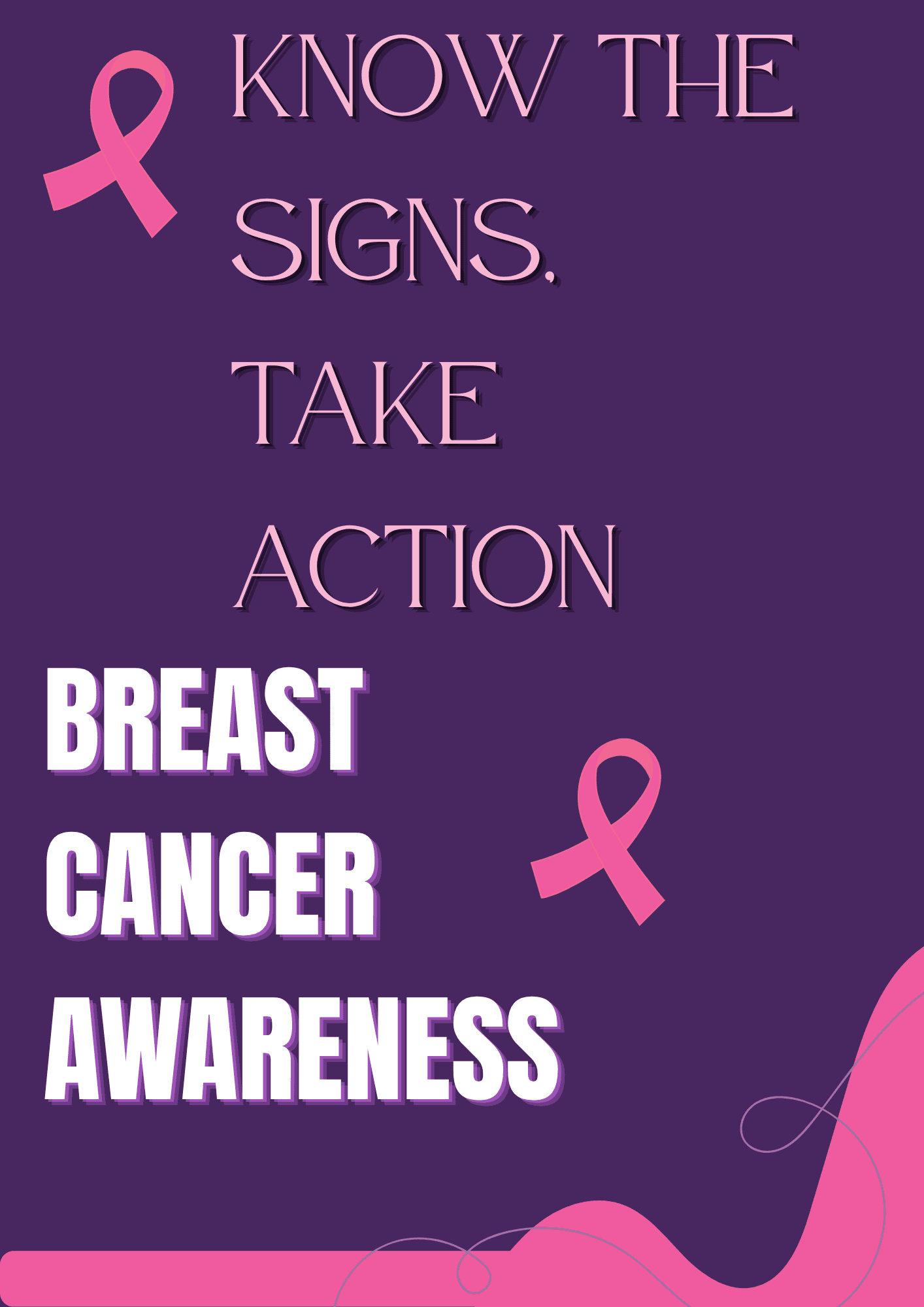
Breast cancer is one of the most common cancers worldwide, affecting millions of women and men each year. While treatment outcomes have improved, early detection remains the most powerful tool in saving lives. Awareness is not just about wearing pink it’s about knowing what to look out for and acting quickly when something feels different. What to Look Out For Changes in the breast can be subtle. Pay attention to: Lumps or thickening in the breast or underarm. Changes in breast size or shape that are unusual. Skin changes such as dimpling, redness, or a texture like an orange peel. Nipple changes: inversion, rash, or discharge (especially bloody or clear). Persistent pain or swelling in the breast or armpit. These signs don’t always mean cancer, but they should never be ignored. What To Do: Practice Breast Self Awareness Regularly check your breasts for changes. Know what is normal for you so you can spot what isn’t. Seek Medical Advice Promptly If you notice any unusual change, consult a healthcare professional. Early evaluation can rule out problems or catch cancer at a treatable stage. Screening Saves Lives Mammograms are recommended for women over 40, or earlier if at higher risk. Ultrasound or MRI may be used for younger women or those with dense breast tissue. Healthy Lifestyle Choices Maintain a healthy weight. Exercise regularly. Limit alcohol and avoid smoking. Eat a balanced diet rich in fruits, vegetables, and whole grains.
Why Awareness Matters Breast cancer does not discriminate it affects young and old, women and men. In Kenya and across the world, survival rates improve dramatically when cancer is detected early. Awareness campaigns in October remind us to take action, support survivors, and encourage loved ones to get screened. Awareness is empowerment. By knowing the signs, practicing self-checks, and seeking timely medical care, we can reduce the impact of breast cancer. This month, let’s honor survivors, support those in treatment, and spread the word: early detection saves lives.(Information adapted from general guidance by the World Health Organization (WHO) and the American Cancer Society (ACS), written in original form for awareness purposes.)
This article provides general awareness information. It does not replace professional medical, legal, or emergency advice.